

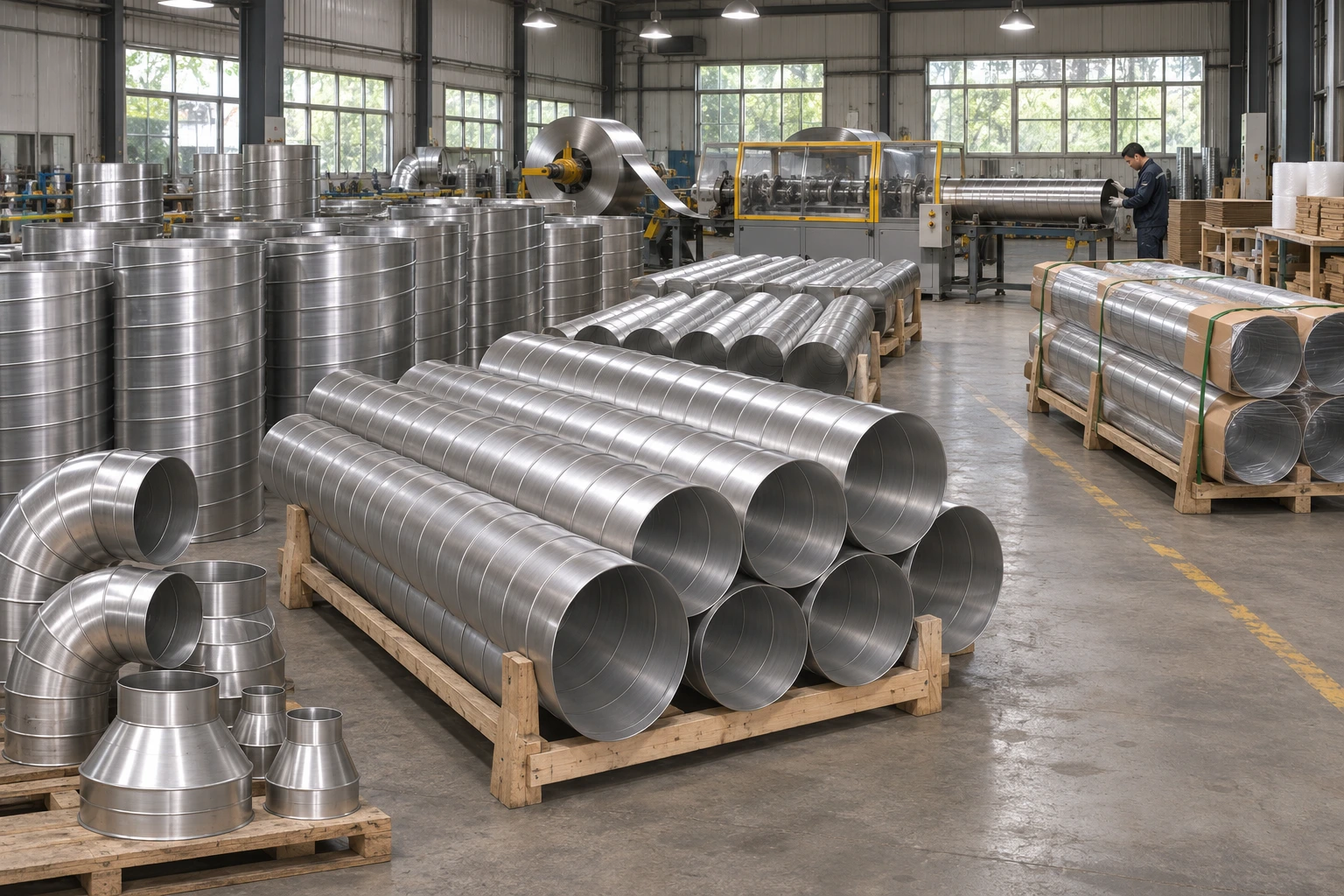
 Stainless steel does not mean that condensation will not form on the surface of the air duct. The air temperature in the pipe, the relative humidity of the environment and the surface temperature jointly affect the condensation of water vapor; when the surface is lower than the environmental dew point, water droplets may appear on the interface, bracket or insulation gap. If the Zhuhai project has cold wind, hot and humid air or outdoor laying conditions, the operating season, pipeline location and insulation range should be checked together before procurement and installation. Condensation cannot be simply attributed to the material.
First locate the time and location of condensation appearance
Record whether condensation occurs during startup, shutdown, or weather changes, and mark specific locations such as straight pipes, flanges, elbows, valves, hangers, and equipment interfaces. Observe along the pipeline whether the water droplets are concentrated in the joints in a linear shape or cover a large area; at the same time, confirm the humidity of the adjacent space, the supply air temperature and the surface condition of the pipeline. If there is water accumulation that affects the safety of the ceiling, equipment or electrical appliances, on-site protection should be done first, and then the cause should be investigated.
The insulation layer is continuous, so cold bridges are not easily formed at the interface.
Check the thickness of the insulation material, the closing method, the seam pressure and the outer sheath to see if they are complete, focusing on whether there are exposed sections in flanges, supports and hangers, valves and wall penetrations. If the insulation layer is not tightly cut at elbows and tees, or if the tape or adhesive does not match the environment, water vapor may enter the material and weaken the insulation effect. The overlapping direction and edge sealing method of the moisture-proof layer or vapor barrier should be constructed according to the system design and material instructions to prevent the outer layer from appearing intact but having moisture inside.
Brackets, valves and drainage paths should be looked at together
Local thermal bridges may form when the metal bracket is in direct contact with the pipe wall, and the insulation structure at the bracket should be clarified in the design stage. Whether the condensed water in the air duct needs to be collected and discharged should be determined based on the system type, pipeline slope and equipment requirements; when drainage is required, low points, water collection components and maintainable space should be reserved in advance. Do not drill holes for drainage at the lowest point of the air duct to avoid damaging the structure, air tightness or sanitary conditions.
Review the plan according to working conditions and arrange re-inspections
Submit the design temperature and humidity, insulation material performance, laying environment, interface methods and equipment operating conditions to relevant technical personnel for comprehensive confirmation, and record the surface temperature and ambient humidity when necessary. After the rectification is completed, recheck the interfaces, hangers and insulation closing points under similar operating conditions, and observe whether water stains reappear after a period of time. Record the time, location and measures to facilitate the differentiation of different causes such as insulation defects, changes in operating parameters and inadequate maintenance.
Specific insulation thickness, vapor barrier practices, and drainage requirements should be determined by the design documents, equipment descriptions, and applicable project specifications. Marking the interfaces and bracket nodes in the drawings in advance is usually more labor-saving than disassembling the insulation layer for inspection after sealing.