
 The acceptance of welded air ducts should not only be based on whether the appearance is bright, nor should the same inspection list be applied to pipes with different media, pressures and uses. Before receiving the goods or installing, first find the corresponding drawing version, material requirements, pipe section number and acceptance terms, and confirm which parts require visual inspection, dimensional review or prescribed inspection. The records should be able to correspond to specific pipe sections, so that when problems are discovered later, disassembly and inspection will not be repeated due to unclear numbers.
First check the material identification and drawing version
Check whether the material grade, plate thickness, pipe diameter or cross-sectional size is consistent with the procurement documents, and check the pipe section number, flow direction, interface direction and equipment connection location. If the project has material certification, welding process or inspection data requirements, they should be collected according to the contract and corresponding to the batch. When drawing changes occur on site, first confirm that the processing basis has been updated. You cannot determine that dimensional differences are allowable deviations based solely on verbal explanations.
Welds focus on continuity and visible defects
Check along the weld seam to see if there are obvious appearance abnormalities such as incomplete welding, cracks, burn-through, undercuts, pores or welding slag residue, and confirm that the seam to be welded complies with the requirements of the drawing. Visual inspection can only detect visible problems on the surface and cannot replace other inspections required by design or specifications. For stainless steel pipe sections, post-weld cleaning, surface treatment and anti-pollution protection should also be checked according to the agreement to avoid the risk of subsequent corrosion caused by carbon steel tools or residues.
Flange, port and flat dimensions require matching inspection
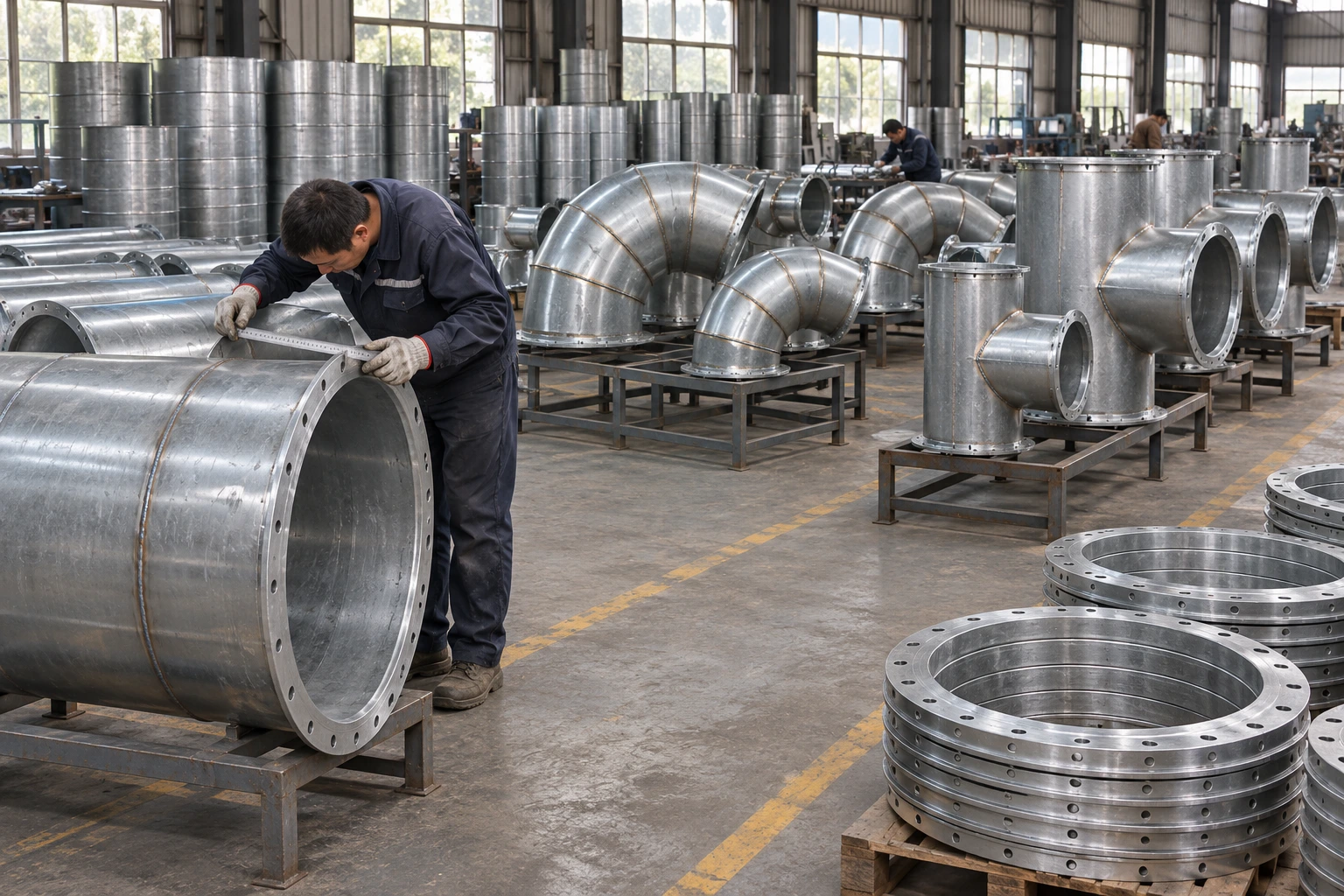
Check the outer dimensions, hole positions, plane conditions and port directions of the flanges at both ends with the mating parts or equipment interfaces. Obvious warping of the flange surface, hole position deviation, oval port or local dent in the pipe body may cause strong tension, uneven gasket pressure or joint misalignment during installation. When measuring, mark the datum plane and measuring points; for long pipe sections or large-section components, it is also necessary to combine transportation support and hoisting methods to see whether the deformation affects the assembly.
Keep inspections, corrections and re-inspections in the same record
The acceptance record can include the pipe section number, inspection location, measurement tools, results, photos, person responsible for the problem, and re-inspection time. After discovering defects, isolate or mark them first, and then determine the repair plan based on the design requirements; it is not allowed to thin the welds, heat the defects, or change the flanges at will without evaluation. During re-inspection, check the repaired area and its adjacent areas, and relate the final conclusion to the original problem.
If the air duct is transported in sections or hoisted on site, the local indentations left by the lifting points and transportation supports should also be checked during acceptance, and the verticality of the end face, the parallel status of the flange, and the size of the counterpart should be reviewed. If any deviation is found, first compare it with the drawing and the allowable deviation, and then confirm whether it affects assembly and sealing; do not leave unrecorded processing deviations to the installation personnel for forced correction on site. For pressure-bearing, smoke exhaust or special media systems, the acceptance procedures and judgment values should be specified in the project design documents, contracts and applicable standards. Processing acceptance and post-installation system testing belong to different links. Only by recording the scope and results of both can we fully explain whether the welded air duct meets the project requirements.