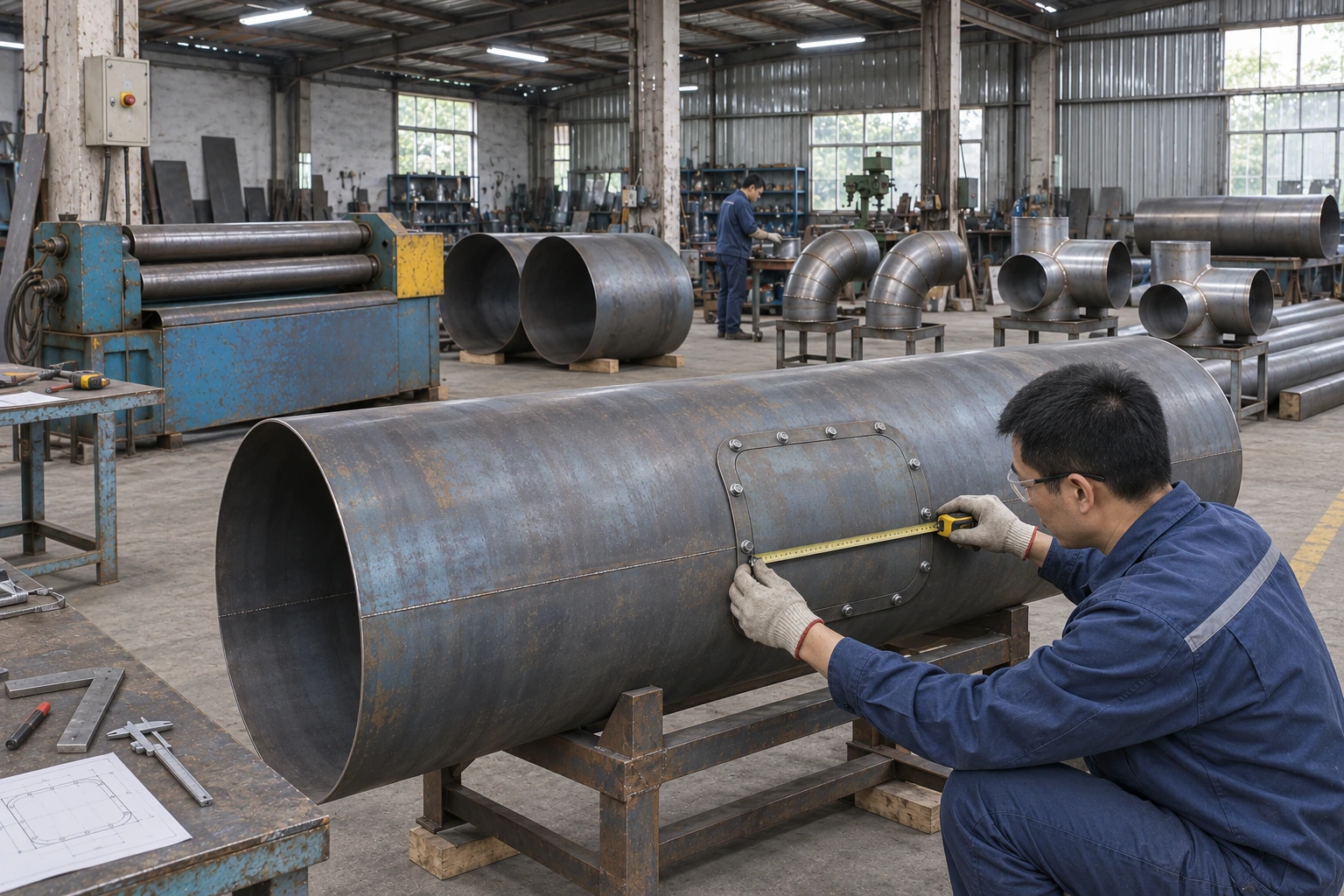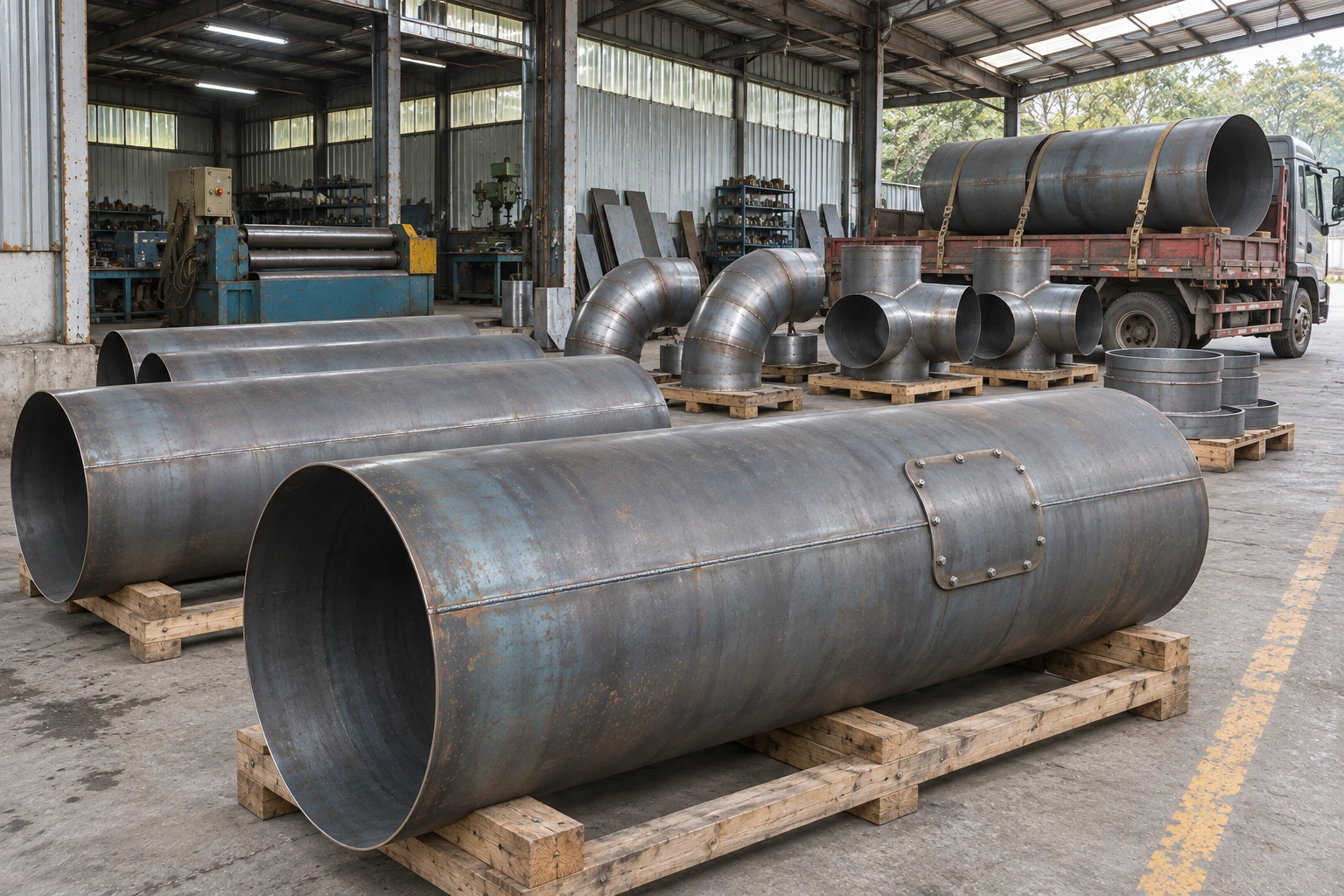

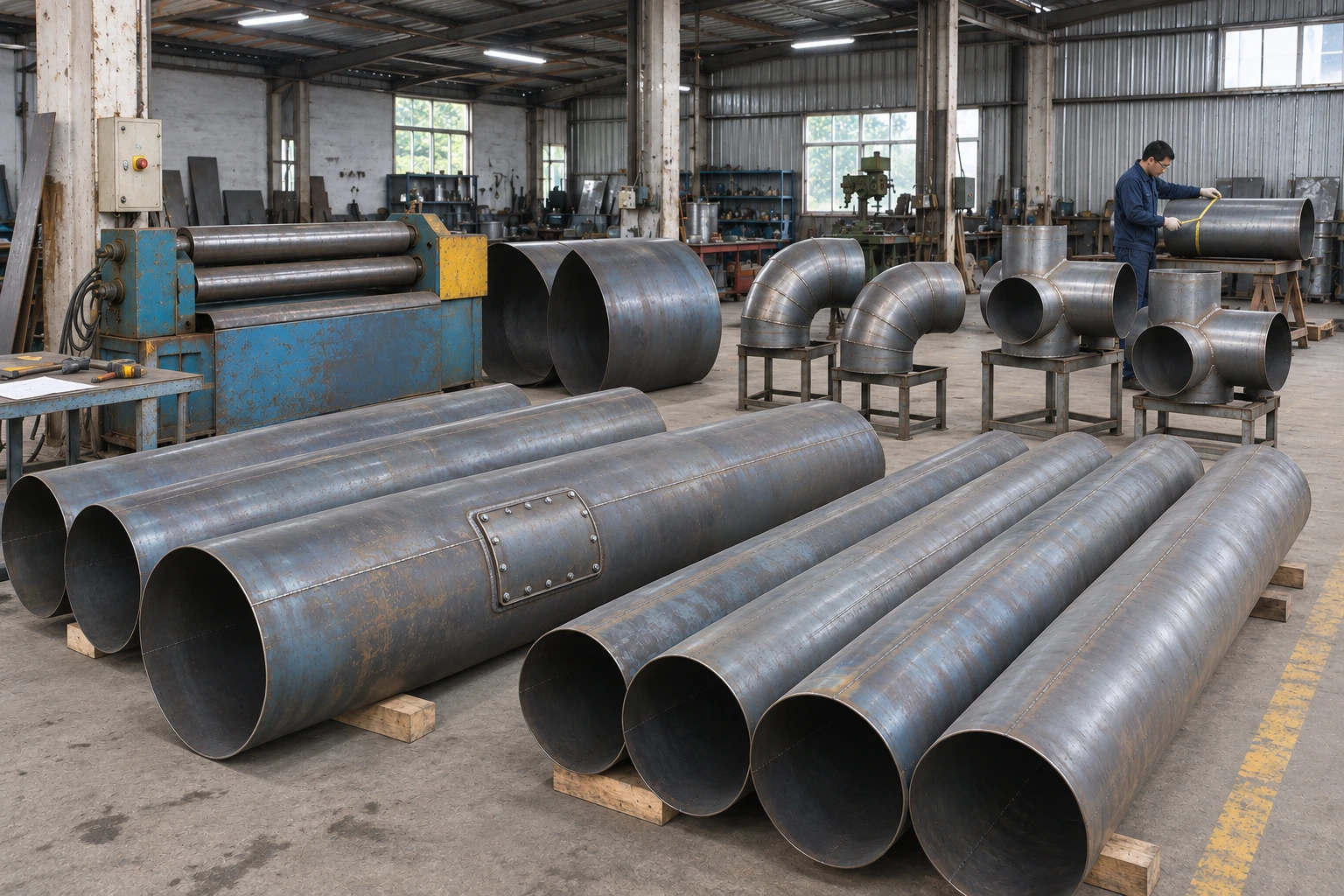
In a factory project in Zhaoqing, an access panel was included in the fabrication drawings for a circular carbon steel duct; however, once installed, it was obstructed by cable trays, suspension rods, or insulation. To ensure ease of future inspection and cleaning, the following factors must be verified before finalizing the location of an opening: required maintenance tasks, standing positions for personnel, tool access paths, and the opening direction of the access panel cover.
Specify the intended purpose of any access/inspection ports.
Different maintenance tasks—such as external inspection, cleaning via inserted tools, or component disassembly—require specific clear opening dimensions and surrounding clearance. On-site maintenance staff should identify the areas to be inspected, the tools to be used, and the operational procedures; this information is then provided to the project designers to determine the necessary openings. Drawings must clearly specify the clear opening dimensions, the external dimensions of the cover plate, and the curvature required to match the duct diameter. Relying on the cover plate’s external dimensions as the opening size can lead to costly rework if tools cannot fit through the resulting gap upon arrival.
Mark openings according to pipe segments and installation orientation
On fabrication drawings, clearly indicate the pipe segment number, the distance from the center of the opening to a reference end-face, the viewing perspective, and the orientation of the opening. Determine the exact positioning by considering the longitudinal weld seams, connection ends, supports, and adjacent components. Select an appropriate cover plate design—such as a removable type—based on project requirements, ensuring sufficient space for fasteners and tools. If external insulation or a protective layer is required, specify the edge-finishing and access methods on the detail drawings.
Map out the space required after access covers are opened.
Indicate the removal path or opening range for cover plates on cross-sectional drawings, while also marking the positions of walls, beams, cable trays, equipment, and operating platforms. Even if a pipe section appears to fit within a space, maintenance may be hindered if there is insufficient room to reach the fasteners. When multiple parallel pipelines are present, one must consider not only the cross-section of an individual pipe but also the spacing and accessibility of adjacent pipelines after installation.
Clearly specify requirements for cover plates and seals when placing an order.
Compile a project schedule detailing pipe diameters, carbon steel plate thicknesses, dimensions for openings and cover plates, fastener specifications, sealing materials, and requirements for internal and external surface protection. The need for reinforcement around openings and the choice of sealing methods should be determined by the design team based on specific operating conditions. For systems with specialized requirements—such as smoke exhaust or other unique operational scenarios—the appropriate access panel configuration must be confirmed for the specific project before fabrication begins; do not simply apply standard ventilation duct details.
Perform trial assembly before shipment; verify against drawings upon arrival.
Before shipment, verify the identification numbers, opening orientations, cover plate fit, and quantity of accessories for any pipe segments equipped with access ports; ensure that cover plates are not used as lifting or load-bearing points during loading. Upon arrival, cross-reference the assembly against the drawings to ensure that access ports remain accessible and that components can be easily reached. When coordinating with Jinyou (the manufacturer), provide details such as pipe diameter, intended access/maintenance locations, on-site cross-sections, and operational requirements; this allows for the consolidation of manufacturing and maintenance specifications into a single set of fabrication drawings. If the project involves phased deliveries, ensure that the specific item numbers for these segments are clearly listed in the packing list.