

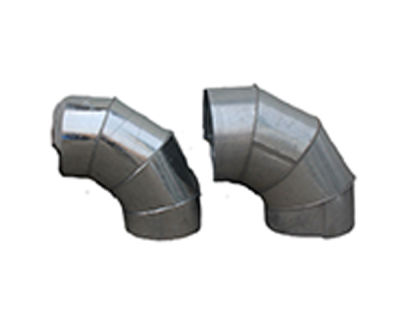
When procuring welded air ducts for industrial facilities, commercial kitchens, or equipment exhaust systems in Guangzhou, the focus is often placed on the appearance of the weld seams. However, neat-looking welds on individual segments do not necessarily mean the entire system... The system has met the project requirements. Inspections should encompass flange joints, access ports, and the connection points for fans and other equipment. To minimize the need for rework due to air leakage, verification should be conducted at three key stages: prior to fabrication, upon arrival, and after installation.
Explain the rationale for selecting a welded construction.
Provide the manufacturer with details regarding the system's purpose, the medium being transported, temperature, design pressure, materials, and connection drawings, so they can verify that their fabrication processes meet project requirements. Requirements for general ventilation, kitchen exhaust, and specialized process exhaust can differ significantly; therefore, one cannot simply apply the same approach to all "welded ductwork." For projects involving specialized media, designers must explicitly define the requirements for materials and connections.
Weld inspections must be based on clear, established criteria.
At the time of ordering, specify the required weld seam locations, the scope of visual inspections, and any project-specific testing protocols. Upon arrival, inspect the welded areas for any visible anomalies, check the duct body for deformation, and verify that the connections match the technical drawings. Maintain records of the batch and the inspection results. Visual inspection alone cannot substitute for the testing required by drawings or contracts; furthermore, one should avoid making blanket guarantees that a component will be "absolutely leak-proof" under any and all operating conditions.
Flanges and equipment interfaces must be verified one by one.
Include flange types, hole patterns, gasket requirements, fasteners, and equipment interface dimensions in the verification checklist. If equipment-side dimensions are not yet finalized, obtain formal sign-off on the interfaces before proceeding with the fabrication of the relevant duct sections. Forcing components into place or misaligning joints on-site can compromise the integrity of the connections; if assembly proves difficult, re-verify the dimensions and installation positioning.
Do not overlook access panels and the connections between duct segments.
During the design phase, coordinate the placement of access panels and operational clearances for areas requiring cleaning, inspection, or maintenance; also, specify requirements for closure and sealing. For ductwork delivered in batches, implement a system based on duct system and segment numbering, ensuring each connection point is cross-referenced with installation records. This facilitates rapid identification of specific locations should any issues arise later.
Conduct testing and re-inspection post-installation in accordance with project requirements
Inspections conducted at the fabrication facility differ in scope from those performed on-site after the system has been fully assembled. A testing plan—defining the scope, methodology, conditions, and acceptance criteria—should be established by the relevant project stakeholders and scheduled for a phase that facilitates both inspection and any necessary corrective work. Any identified issues, along with the corresponding remedial actions and re-inspection results, must be documented to ensure a complete handover record.
You may use this communication checklist directly when making a purchase.
When submitting requirements to a supplier, include the intended application, the latest version of the drawings, material and thickness specifications, interface dimensions, quantities, and the delivery address in Guangzhou. Additionally, confirm whether the quoted price covers accessories, transportation, installation, and any agreed-upon testing. This ensures that when comparing different suppliers, you are evaluating identical scopes of delivery.
For inquiries regarding the fabrication of welded air ducts, please provide the relevant drawings and project operating conditions so that both parties can define the scope of work. The installation, testing, and acceptance of the ductwork shall be conducted in accordance with the project’s design documentation and all applicable standards.
Technical Reference: ASHRAE’s *Duct Design* (https://handbook.ashrae.org/Handbooks/F25/IP/F25_Ch21/F25_Ch21_ip.aspx) provides general principles for understanding duct connections and controlling system air leakage.